
IDÉEN AT BEHOLDE
Bevægelsespræpositioner tegner en vej: into går ind, out of går ud, across krydser en overflade, through gennemborer et rum, past passerer uden at stoppe.
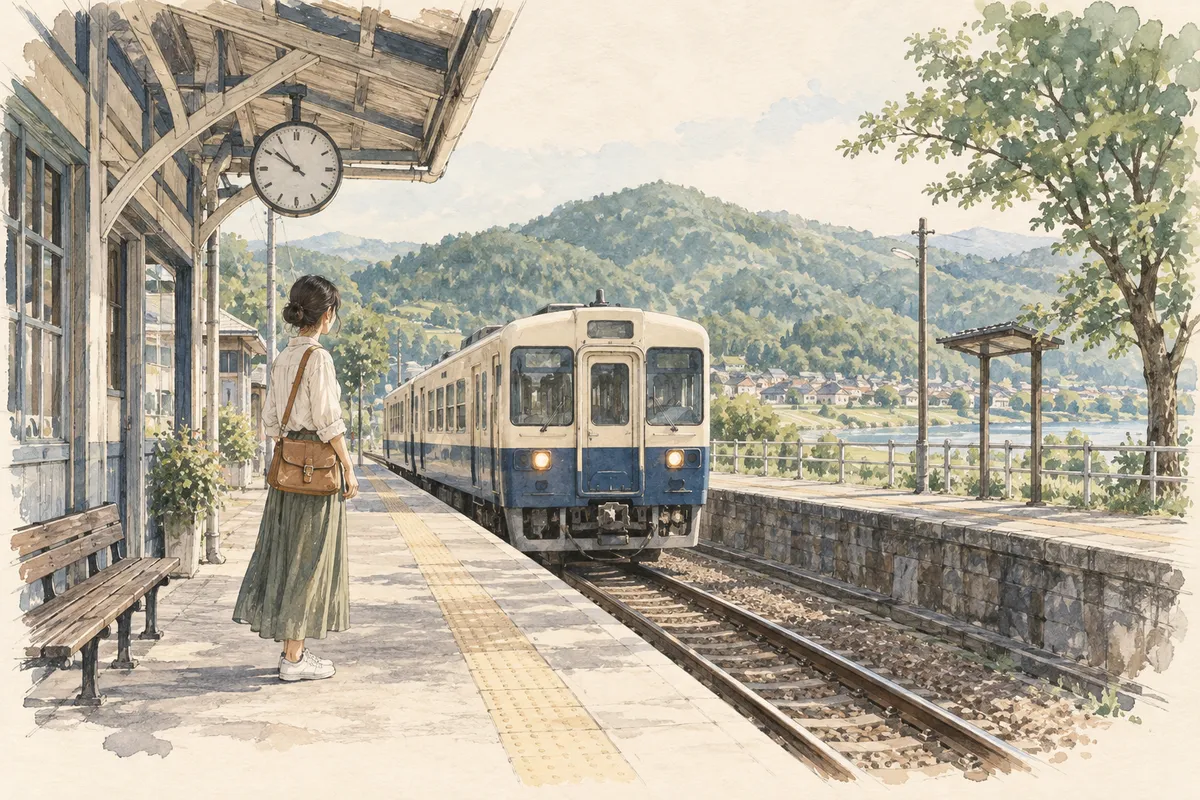
01into and out of: entering and leaving
Use into for movement ending inside: walk into the room, jump into the pool, get into the car. Use out of for movement ending outside: walk out of the building, get out of the taxi. The pair is a perfect mirror — one reverses the other — so learn them together with the same verb.
She walked into the room and closed the door.
into + enclosed space
She walked into the room and closed the door.
02across, through, along, past: four paths
Swim across the river: you cross from one side to the other over a surface. Walk through the park: you are inside a space, surrounded by trees. Stroll along the river: you follow its line without crossing it. Walk past the bank: you go by it without going in. Each word draws a different map — sketch them once and the difference stays with you.
They walked through the tunnel to the other side.
through + enclosed passage
They walked through the tunnel to the other side.
The dog ran across the road.
across + surface from side to side
The dog ran across the road.
03to, towards, for, from
Go to school names the destination. Run towards the school describes the direction — you may or may not arrive. Leave for Shanghai announces the planned destination of the trip. Come from Beijing names the origin. Four words, four different relationships to the same place.
Two traps live here. Go home takes no preposition at all — home behaves like an adverb in go home, come home. And arrive never takes to: arrive at the station for points, arrive in London for cities and countries. Memorize arrive at and arrive in as fixed pairs.
We left for Shanghai early in the morning.
leave for + destination
We left for Shanghai early in the morning.
04up, down, over, under
Climb up the stairs, go down the hill: vertical paths. Jump over the fence: the path arcs above an obstacle. Crawl under the table: the path passes beneath. Combine them with the verbs they love — climb up, fall down, get over, hide under — and store each combination as one chunk instead of two separate words.
DIN TUR
Skab forbindelsen.
Læs situationen før valget. Grunden er lige så vigtig som svaret.
Videre læsning
Vi laver eksemplerne med AI-hjælp. Brug afhænger af kontekst; begyndermønstre dækker ikke alt. Se kilderne nedenfor.